

After Melbourne’s winter rain, cooler temperatures and slower plant growth, spring brings a noticeable change in the garden. New shoots appear, lawns start growing faster and previously hidden problems become easier to spot. For homeowners, spring is when a little prep makes the warmer months a lot easier to manage. A practical spring check covers:
- Fixing winter damage before new growth gets dense.
- Getting soil, lawns and garden beds ready for active growth.
- Checking irrigation before watering demand goes up.
- Dealing with weeds, pests and plant health problems early.
Bayside Gardening has experience providing professional gardening services and takes a seasonal approach to garden care. That means looking at plant type, soil condition, drainage and local weather. This blog walks through a spring garden maintenance checklist.
What Does A Melbourne Garden Need After Winter?
Spring maintenance should begin with a condition check. Winter can leave behind compacted soil, damaged branches, blocked irrigation points, weeds and areas of poor drainage. Identifying these issues early gives plants a better foundation for the growing season.
Start With The Garden Beds
Look closely at the areas around established plants rather than immediately adding fertiliser or mulch.
Check for:
- Waterlogged or compacted soil.
- Exposed roots.
- Broken branches.
- Dead plant material.
- Weeds competing with established plants.
- Areas where water does not drain properly.
Soil testing can be worthwhile where plants have repeatedly struggled. It can provide information about pH and nutrient levels before amendments or fertilisers are selected.
Look At Plant Structure
Winter is also useful for spotting branches that have become damaged, weak or overcrowded. Remove dead or damaged material where appropriate, while taking care not to prune plants according to a generic seasonal rule. The correct timing depends on the species, growth habit and flowering cycle.
Get Your Melbourne Garden Ready For Spring
Which Pruning Jobs Should be Done in Spring?
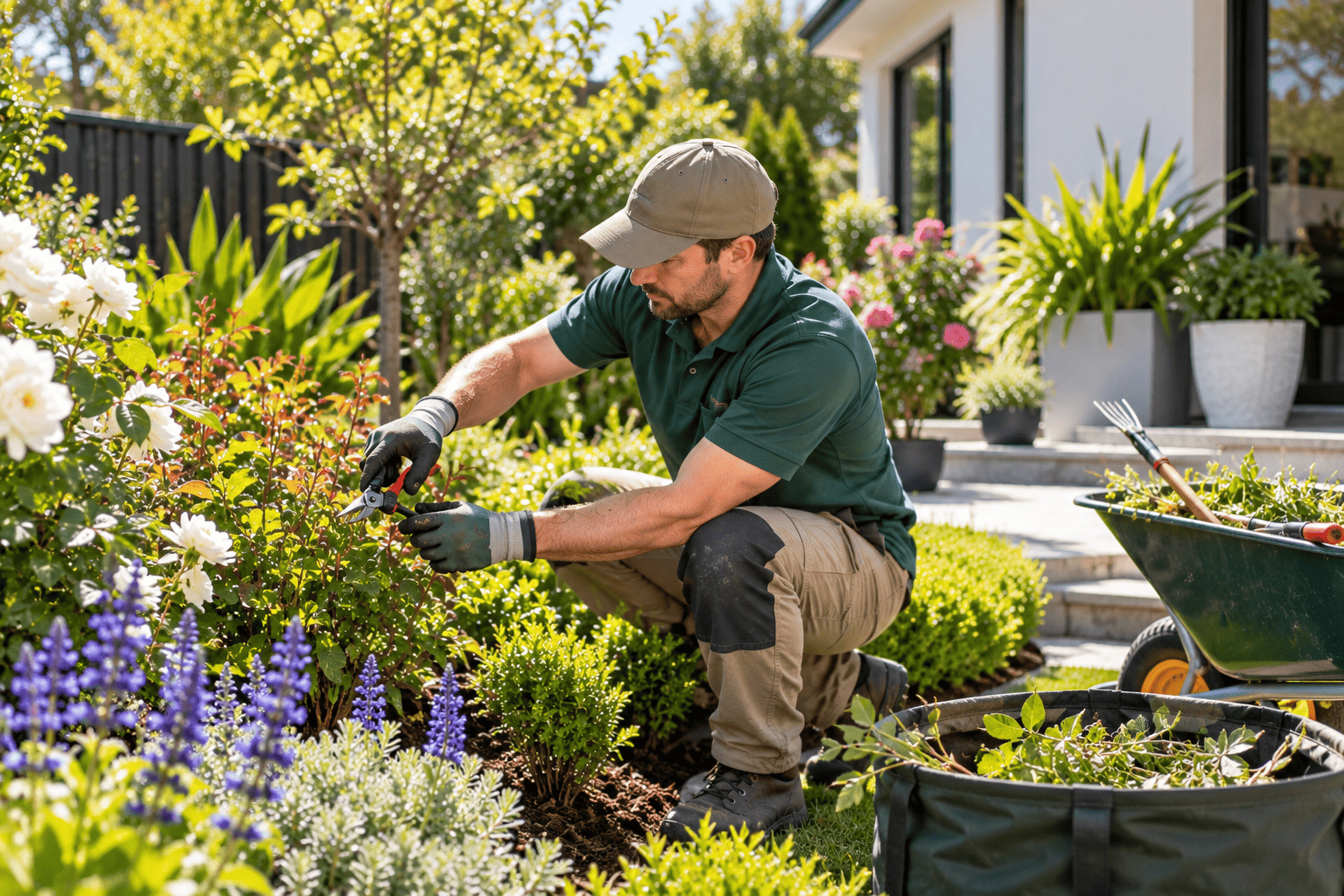
Go easy with spring pruning. The idea is to take out growth that doesn’t belong while keeping the plant’s natural shape and letting it develop.
Start with:
- Dead or damaged branches.
- Branches that cross or rub against each other.
- Growth blocking paths.
- Overly dense patches, where it makes sense.
- Spent growth on plants that suit it.
Flowering plants need extra care, because cutting at the wrong time can take off developing buds. Natives, ornamentals and fruiting plants can also each need different pruning.
So begin by working out what each plant is and looking at it properly, rather than cutting back everything that looks overgrown.
How Do You Prepare Lawns And Garden Beds For Spring Growth?

Spring is when to fix winter wear and get the growing areas ready before plants pick up speed.
On lawns, look for thin patches, compacted spots and uneven growth. If conditions suit, core aeration and overseeding can help the lawn establish.
For garden beds:
| Task | What to look for |
|---|---|
| Weeding | Pull established weeds before they compete with new growth |
| Mulching | Keep the soil covered, but don’t pile mulch against stems |
| Soil improvement | Add organic matter where the soil needs it |
| Fertilising | Base it on what the plants need and the state of the soil |
| Plant material | Remove unhealthy or spent growth where appropriate |
Mulch is very useful when it’s applied properly. It helps even out soil temperature, cuts moisture loss and keeps weeds down. The depth and type should suit the garden rather than follow one fixed formula.
When Should You Check Your Irrigation System?
Check it before Melbourne’s warmer weather pushes water demand up. Small faults show up more once plants are growing actively.
Look at:
- Drippers and sprinkler heads.
- Leaking connections.
- Blocked outlets.
- Uneven coverage.
- Timer settings.
- Spots getting too much water.
If the system no longer fits the garden, irrigation installation may be worth considering, instead of making up for poor coverage by hand watering again and again.
What matters is even, appropriate watering based on what the plants need and the soil. More water doesn’t automatically mean healthier plants.
How Can You Deal With Spring Weeds, Pests And Disease?
Spring growth is fast, so a small problem can spread quickly if it’s missed. Have a look at new leaves, stems and the base of your plants for anything that seems off.
Signs to watch for:
- Chewed or distorted leaves.
- Spots on leaves.
- Sticky residue.
- Branches or shoots dying back suddenly.
- Growth that looks different from normal.
What you do next depends on what’s causing it. Integrated pest management means working out the problem first, then picking a treatment that fits, rather than grabbing a chemical straight away.
A good garden cleanup helps too. Clearing out unwanted plant material and opening up access around the beds makes it easier to spot problems next time.
What Should Be Included In A Spring Garden Maintenance Schedule?
A useful schedule should match the property rather than follow the same routine every month.
| Spring priority | Suggested timing |
|---|---|
| Winter damage check | Early spring |
| Soil and drainage assessment | Early spring |
| Pruning | According to plant species |
| Lawn renovation | When lawn conditions are suitable |
| Mulching | After soil and weed assessment |
| Irrigation inspection | Before warmer weather |
| Pest and disease checks | Throughout active growth |
| Ongoing mowing and weeding | As growth increases |
For gardens containing both native and exotic plants, care should reflect their different requirements.
For larger properties, a scheduled garden maintenance program can help divide seasonal tasks into manageable visits instead of waiting until several problems require attention at once.
Prepare Your Garden For Healthy Spring Growth
Conclusion
A spring garden maintenance checklist should do more than list routine chores. It should help you identify what winter has changed, correct problems before growth accelerates and prepare the garden for Melbourne’s warmer conditions.
Bayside Gardening provides professional garden maintenance in Melbourne with attention to plant requirements, soil, irrigation and seasonal conditions. If your garden needs a one-off spring reset or ongoing care, a practical assessment can help determine which jobs deserve attention first.
FAQs
Should I fertilise my garden as soon as spring begins?
Not automatically. Fertiliser should suit the plant and its growing conditions. Where plants show poor growth, soil testing can help identify whether pH or nutrient issues may be contributing before a fertilising program is selected.
Is spring suitable for planting native plants?
Spring can be suitable for planting, although plant selection should account for the property’s soil, drainage, exposure and available water. Choosing plants suited to the site’s conditions can reduce the need for intensive intervention later.
What should I do if one section of my garden stays wet?
Start by identifying why water is collecting there. Compacted soil, grading and drainage problems can all contribute. Repeatedly watering less may not solve the underlying issue if the site cannot drain effectively.
How can I tell whether my irrigation is working properly?
Run each irrigation zone and observe the coverage. Look for blocked emitters, leaks, dry patches and areas receiving excessive water. Checking the system before summer gives you time to correct faults before watering demand increases.